Is Feed Only Performance Max Dead? Standard Shopping vs PMax After Maximise Conversion Value and AI Max for Shopping
Google have just killed every reason to run a Feed Only Performance Max campaign in Google Ads, and they did it without ever telling you. Two updates are behind it. Google announced one, but buried the part that
Google have just killed every reason to run a Feed Only Performance Max campaign in Google Ads, and they did it without ever telling you.
Two updates are behind it. Google announced one, but buried the part that actually matters, and I'd bet most people who read the announcement missed it. The other went live across all accounts with no announcement at all.
Between them, the shopping campaign decision in your account goes from three options down to two. I've run Big Flare for over 13 years, and this is a decision we make for every account we take on, so an update that changes the answer is a big deal in my book.
The Old Three-Way Choice
Standard Shopping is the old-school option. Shopping ads only, with full control.
Normal Performance Max has the product feed and all the asset types attached, and shows ads everywhere in Google: Shopping, Search, YouTube, Display, Gmail and Discover.
Feed Only Performance Max keeps the product feed but strips out every asset. No images, headlines, descriptions or video, so PMax can only serve shopping ads.
Why deliberately cripple PMax? Because most ecommerce accounts don't want most of its channels. Shopping is the good stuff. Display, Gmail, YouTube and Discover are, in a lot of stores, where the budget goes to slowly die. Feed Only kept the good part and cut out the potentially wasteful channels.
Why Feed Only Used To Beat Standard Shopping
Advantage One: The Launch Bid Strategy
Maximise Conversion Value is the best starter bid strategy there is for a brand new campaign with no conversion data. You're telling Google to find as much revenue as it can with your budget, without pinning it to a ROAS target.
Standard Shopping didn't have it. The closest option was Target ROAS, which is a rough way to launch, because you're asking Google to hit a specific return before it knows anything about who buys from you.
My team and I have often launched PMax or Feed Only purely for Maximise Conversion Value, even when Standard Shopping might otherwise have been the better fit. And that came with a trap. Once PMax is performing, moving to Standard Shopping means a fresh learning period and a dip in results. So you stay put, locked into PMax in accounts it never suited.
Advantage Two: A Path Into Search
Shopping ads and search text ads are the two channels that carry an ecommerce account, and you generally want both.
With Feed Only, you could later add headlines and descriptions, and the same campaign would start serving search text ads. Standard Shopping had no path to search at all.
But this has been my big bugbear with Feed Only for years. Assets in PMax are all or nothing. Add them to unlock search, and YouTube, Gmail, Display and Discover switch back on too. Shopping and search in one campaign, without the channels I didn't ask for, is what I've wanted for years. Google never offered it.
Update One: Standard Shopping Now Has Maximise Conversion Value
To be clear, Target ROAS on Standard Shopping isn't new. That's been available forever. The new option is Maximise Conversion Value.
And Google hasn't announced it. No blog post, no release note, no email to advertisers. They simply switched it on, quietly. My team spotted it in a client account, then checked the rest of the accounts we manage, and it's in every single one. This isn't a beta or a gradual rollout. It's live in your account right now, in the bid strategy dropdown of any Standard Shopping campaign.
So advantage number one is gone. Standard Shopping can now launch stone cold, with zero conversion data, on the same bid strategy PMax usually launches on. The reason we kept reaching for PMax has evaporated, and the lock-in trap goes with it.
A Quick Win If You're On Target ROAS
This pays off today in one specific case. Your Standard Shopping campaign is on Target ROAS, the ROAS is on track, it's limited by budget, and you don't want to increase spend. If that's you, switch to Maximise Conversion Value.
Ignore the little "Limited by budget" badge. Look at the Lost IS (Budget) column instead. Anything above 0% means you're limited by budget. If it's sizeable, say over 10%, Target ROAS is quietly giving you a sub-optimal result. You're missing out on revenue, and a higher ROAS is possible for that same spend.
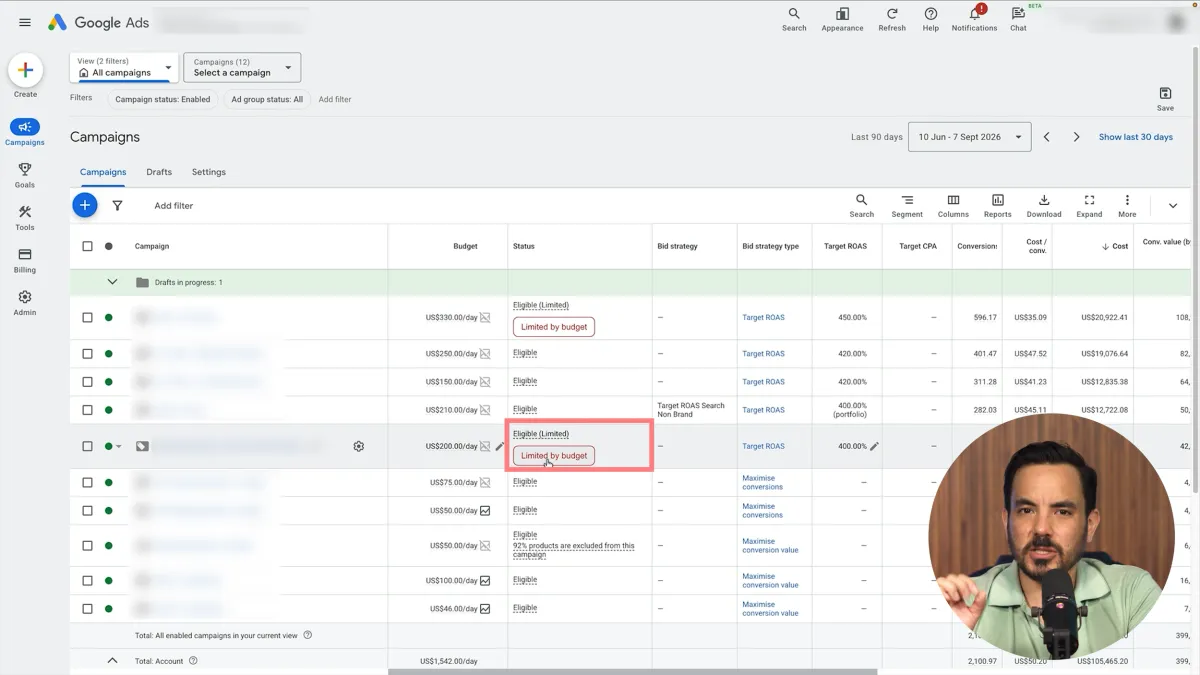
You could hunt for the optimal ROAS target by trial and error, but that's clunky and wastes time. Maximise Conversion Value automates the hunt and finds it much faster. Make that one switch and you should see a noticeable improvement in revenue and ROAS almost immediately.
Update Two: AI Max for Shopping
This is the bigger of the two updates in my opinion.
AI Max is a set of campaign features that lets Google go beyond what you've handed it. Two of them work as a pair here: text customisation and final URL expansion. Switch both on, and Standard Shopping can serve search text ads alongside your shopping ads, with Google writing the ad text and matching it to the most relevant landing page on your site.
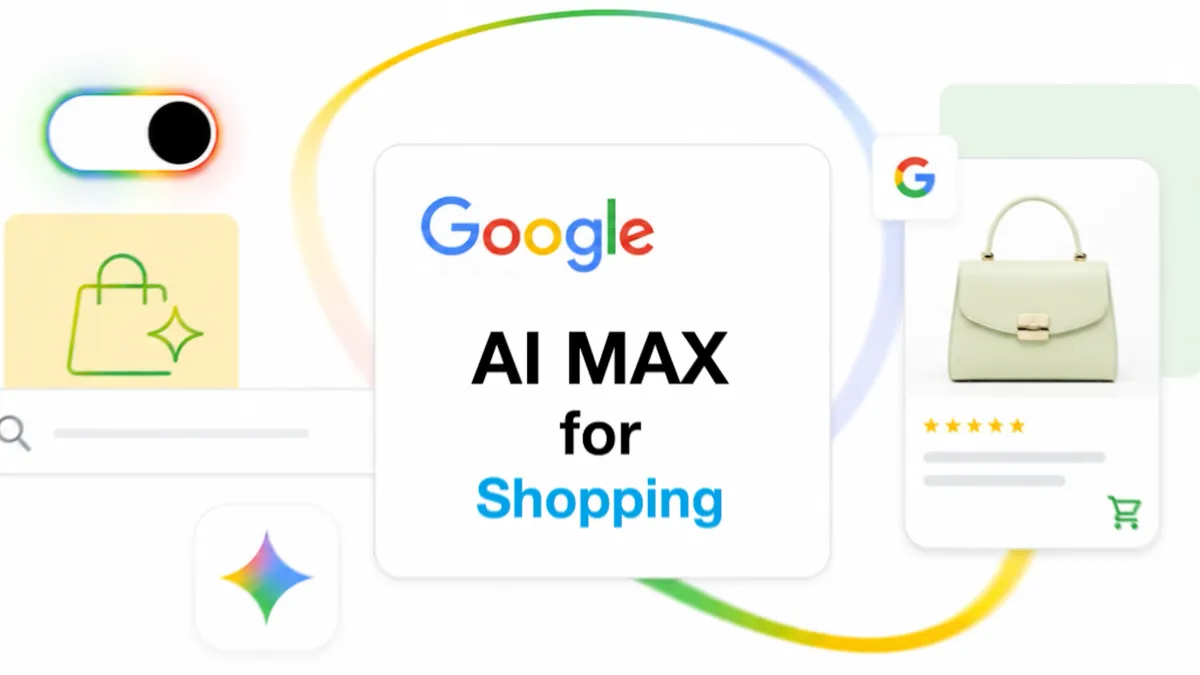
So Standard Shopping becomes shopping ads plus search text ads in one campaign, and nothing else. No YouTube, Gmail, Display or Discover. The exact combination I've wanted for years turned up in Standard Shopping, not PMax.
Google did announce this one. But the announcement focused on the secondary stuff, the ad text and the landing page matching. It never made the real headline obvious: switch this on, and your shopping campaign effectively becomes a shopping plus search campaign. Most advertisers haven't clocked it yet.
One caveat. At the time of writing, AI Max for Shopping is still in beta and rolling out, so it isn't in every account yet. Check your campaign settings to see if you have it.
The Verdict: Two Options, Not Three
Put the two updates together and Feed Only no longer has a job.
Its first advantage, Maximise Conversion Value, is neutralised. Its second, the path into search, has actually reversed. Standard Shopping now has the better version, because its route into search doesn't drag along four other channels you might not want. Feed Only's route always will, because PMax assets are all or nothing.
The blunt version: if you're about to launch a Feed Only PMax campaign, I would probably launch Standard Shopping instead. The real decision now is Standard Shopping or full PMax with all the assets.
When Standard Shopping With AI Max Wins
You want ROAS over volume. Shopping ads are the quickest, easiest route to a good ROAS. PMax also runs on riskier channels, so it can take longer to reach a good ROAS and carries a higher risk of failing outright.
You want shopping and search in one campaign. AI Max for Shopping gives you precisely that. With Feed Only, you'd have to build and manage separate search campaigns, which are trickier to set up and optimise.
You want full control over your channels. Run Standard Shopping plus separate campaigns for any other channels, and you set exactly how much budget goes into shopping, search, YouTube or Display. PMax makes that split for you.
When Full PMax Still Wins
I'm not telling you to bin Performance Max.
You want volume over ROAS. PMax goes into every channel Google has, so it's more scalable and can potentially reach a higher total sales volume.
You want all the channels with an easier setup. Doing that through Standard Shopping means separate campaigns for each channel, more expertise and more to optimise. PMax does it with one campaign.
You already have strong video and image assets. If you have creative you know performs, maybe from your Meta Ads campaigns, PMax lets you test it across YouTube, Gmail, Display and Discover alongside your shopping ads. No amount of AI Max changes that.
What To Do With Your Existing Feed Only Campaigns
Don't panic-switch. If your Feed Only campaigns perform well and you're happy, leaving them alone is perfectly valid. The performance dip from moving could easily outweigh whatever you'd gain.
Moving makes sense if you haven't built search campaigns yet, you want to test scaling into search, and you don't have the skill or time to run proper manual search campaigns. That's the case for migrating to Standard Shopping with AI Max switched on, assuming your account has it by then.
If you do migrate, don't switch PMax off straight away. Launch the new Standard Shopping campaign, leave Feed Only running alongside it, and move budget across slowly. Start at 25% in Standard Shopping and 75% in PMax, wait for that to stabilise, then go to 50/50, then 75/25, and eventually 100%.
It's slower, but that's the point. You never hand your account a cliff to fall off.
Conclusion
For years, ecommerce stores running shopping ads had three campaign types to choose from: Standard Shopping, full Performance Max, and Feed Only Performance Max. Feed Only won on two counts. It could launch on Maximise Conversion Value, and it offered a path into search text ads, even though that path dragged YouTube, Gmail, Display and Discover along with it.
Two updates have removed both advantages. Google quietly added Maximise Conversion Value to Standard Shopping in every account, with no announcement. AI Max for Shopping, still in beta and rolling out, uses text customisation and final URL expansion to let Standard Shopping serve search text ads alongside shopping ads, and nothing else.
If your Standard Shopping campaign is on Target ROAS, hitting its ROAS and losing impression share to budget, switching to Maximise Conversion Value should lift revenue and ROAS without extra spend.
The decision is now two options, not three. Choose Standard Shopping with AI Max when you want ROAS over volume, shopping and search in one campaign, or full control over channel budgets. Choose full PMax when you want volume over ROAS, every channel from a single campaign, or a home for strong video and image creative.
Existing Feed Only campaigns that perform well can stay as they are. If you migrate, run both campaigns side by side and shift budget gradually, from 25% up to 100%.
More Articles
All ArticlesHow to Set Up Google Ads Conversion Tracking in Shopify: Easy Step-by-Step Guide (2026)
If you sell on Shopify and want to run Google Ads, conversion tracking is the first thing to sort out. Without it, Google has no idea which clicks turned into sales, and neither do you. I've run my Google Ads agency,
November 2026 Ecommerce Ads Roundup: Google's Channel Priority Controls, Meta's Automatic Customer Exclusions, AI Mode Ads Go Global, TikTok's Buy Direct Checkout, and Agentic Checkout on Shopify, Google and Walmart
November 2026 ecommerce ad news: Google's priority dial for Search Partners, Meta's automatic customer exclusions, AI Mode ads go global and agentic checkout.